
ISA Calculator (Stocks & Shares & Lifetime ISA): Estimate Your Potential Growth
How to Use This ISA Calculator
This calculator helps you estimate the future value of your Stocks & Shares or Lifetime ISA based on tax-free growth.
Note: This calculator provides an estimate for planning purposes only and does not constitute financial advice.
Stocks & Shares ISA vs Lifetime ISA: Key Differences
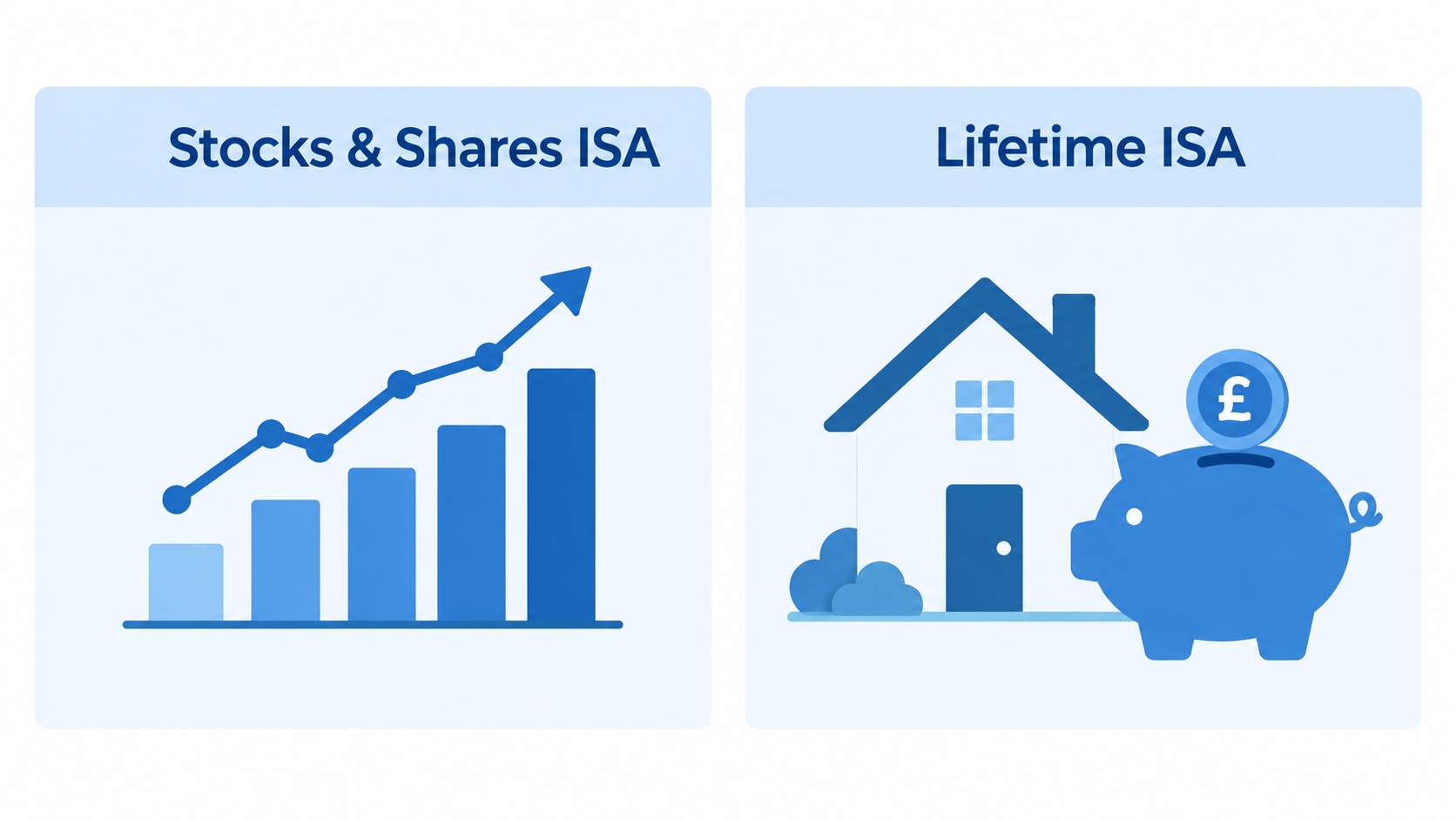
A Stocks and Shares ISA and a Lifetime ISA are both ISA account types, but they serve different purposes. Understanding their structure helps you match the right account to your savings goal, over the years.
The annual allowance works differently for each account. You can invest up to the full ISA limit in a Stocks and Shares ISA, while the Lifetime ISA carries its own separate yearly contribution ceiling, typically.
A key distinction is the government bonus. Only the Lifetime ISA rewards contributions with an added bonus, while the Stocks and Shares ISA relies purely on tax-free growth from your chosen eligible investments, on average.
Age eligibility also separates the two accounts. Anyone eighteen or over can open a Stocks and Shares ISA, but the Lifetime ISA restricts new applicants to a specific younger age range, for most everyday savers.
Finally, withdrawal rules differ sharply. A Stocks and Shares ISA allows flexible access to your money, whereas the Lifetime ISA links withdrawals to first-time buyer purchases or retirement savings at a set age, in reality.
Stocks & Shares ISA Overview
A Stocks and Shares ISA lets you invest in investment funds, individual shares and bonds, and other eligible assets while sheltering everything from personal taxation on your returns each year, when markets perform as expected.
Every UK tax year, you can contribute up to the £20,000 allowance across your chosen ISA accounts. This generous limit makes the Stocks and Shares ISA a flexible core account for long-term investing, for context.
Growth inside the account benefits from tax-free capital gains and tax-free dividends, and most providers apply no withdrawal penalty, giving you a genuinely flexible ISA for changing financial circumstances over time, under typical market conditions.
Lifetime ISA Overview
The Lifetime ISA, often shortened to LISA, is designed around two specific goals: buying a first home or saving for retirement, backed by a valuable 25% government bonus on contributions, though this depends on markets.
Savers can contribute up to a £4,000 annual limit inside the Lifetime ISA, which sits within the overall ISA allowance rather than being an additional amount on top of it, assuming steady long-term market growth.
Eligibility runs from age 18 to 39 for opening the account, with a property price cap on qualifying home purchases and a retirement age 60 rule for penalty-free access later, based on typical market conditions.
Which Goals Each ISA Type Is Designed For
Choosing between accounts starts with your goal. A Stocks and Shares ISA suits general investing and long-term wealth building, without restrictions on when or why you access your money, assuming market conditions remain broadly stable.
The Lifetime ISA is built specifically around saving for a house deposit or long-range retirement planning, rewarding disciplined savers with a bonus that a standard ISA cannot offer, though actual outcomes will naturally vary somewhat.
Many savers treat this as a question of investment time horizon and life stage. Younger first-time buyer savings may favour a LISA, while broader goals often suit tax-efficient growth elsewhere, when growth follows historical patterns.
How to Use This ISA Calculator (Step-by-Step)
Using this tool starts with your calculator inputs. Enter any lump sum amount you already hold, then add a realistic monthly contribution figure that reflects what you can comfortably commit, though real outcomes may differ.
Next, set your investment term in years. This represents how long your money will remain invested before you plan to access it for a house deposit, retirement, or another goal, under normal long-term market conditions.
You then select an expected growth rate. This assumption drives your projected ISA value, so it helps to test more than one scenario rather than relying on a single fixed figure, for the average investor.
Once submitted, the calculator results display your estimated balance over time. Some tools also let you factor in annual charges, which reduce your net growth compared with a charge-free projection, when investments perform broadly consistently.
Finally, compare outcomes across a growth scenario range. Reviewing low medium high growth figures side by side gives a fuller picture than trusting one number as a guaranteed outcome, though this can vary between investors.
Understanding the Growth Rate Scenarios
Most calculators offer three settings: a cautious growth rate, a balanced growth rate, and an adventurous growth rate, often illustrated using 2% 5% 8% scenarios to represent differing risk levels, though every investor's situation differs.
These figures are not predictions. They reflect general assumptions about how different investment styles might perform over time, shaped heavily by real-world market volatility that no calculator can remove, based on consistent long-term market performance.
It helps to treat every output as illustrative not guaranteed. Markets rise and fall, and even a well-diversified portfolio can experience periods of underperformance relative to any assumed growth figure, assuming contributions continue without interruption.
Reading and Interpreting Your Results
Your results typically show a final projected ISA value, broken down into two components: your total contributions paid in, and the total growth generated through compounding over your chosen term, when contributions are made consistently.
If you are using a Lifetime ISA, results should also show any government bonus added, since this meaningfully boosts your balance beyond what contributions and growth alone would produce, when contributions continue steadily over time.
Many calculators include a year-by-year breakdown, letting you see how the final balance at maturity builds gradually rather than appearing as a single distant, disconnected number, though actual results will always depend heavily on markets.
Stocks & Shares ISA Calculator: What the Numbers Mean
When you run projections for a Stocks and Shares ISA, the £20,000 annual ISA allowance sets the ceiling for how much new money can benefit from tax-free investment growth each year, assuming steady annual growth.
Your projected figure reflects compounding returns, where each year's gains are reinvested alongside your original contributions, gradually accelerating growth the longer your money stays invested inside the wrapper, since every investor's circumstances are genuinely different.
Realistic projections should account for platform charges and fund management fees, since these ongoing costs reduce your net return compared with a simplified, fee-free theoretical calculation, though every saver's outcome will depend on personal circumstances.
Many investors choose dividend reinvestment, which channels income back into the account automatically. Over long periods, reinvested dividends can meaningfully influence your total projected balance, though actual results will always depend heavily on real markets.
It is worth understanding what the wrapper protects you from. A Stocks and Shares ISA provides capital gains tax exemption and income tax exemption, though it never removes investment risk warning factors like market fluctuation.
Lifetime ISA Calculator: What the Numbers Mean
A Lifetime ISA projection centres on the £4,000 annual LISA limit, alongside the 25% government bonus that the government adds directly on top of your own qualifying contributions each tax year, though results can vary.
That structure gives a maximum £1,000 bonus per year, achievable through a full monthly LISA contribution £333 approach, spread evenly across twelve months rather than paid as one lump sum, though timing in markets varies.
If you are saving toward property, remember the first home purchase up to the £450,000 limit. Homes priced above this threshold fall outside the scheme's qualifying purchase conditions entirely, though markets rarely behave in predictable ways.
Timing matters too, since a LISA opened 12 months before use for a house purchase is required, while retirement-focused savers instead plan around the age 60 withdrawal milestone, assuming contributions are made regularly without interruption.
Savers can also choose a stocks and shares LISA for growth potential or a cash LISA for stability, each producing a different LISA maturity value by the time you access funds, when markets behave normally.
How the 25% Government Bonus Is Calculated
The government bonus calculation is straightforward: the government adds a 25% top-up on every eligible contribution, subject to the maximum annual bonus £1,000 ceiling across a full tax year, though actual charges vary between providers.
This means a monthly bonus payment structure often works well for consistent savers, since the bonus is typically a bonus paid into account shortly after each contribution is received and processed, assuming no major market disruption.
Importantly, the bonus applies only to money you pay in. It is a case of bonus on contributions only, meaning there is no additional bonus not on growth generated by investment performance, in most cases.
Lifetime ISA Withdrawal Rules and Penalty
Lifetime ISA withdrawal rules are stricter than a standard ISA. Taking money out for reasons other than an approved purpose can trigger a significant LISA withdrawal penalty on your balance, when fees remain relatively modest.
That penalty currently applies as a 25% government charge on the amount withdrawn, meaning any early withdrawal loss can leave you with less than you originally contributed to the account, though every provider charges differently.
A qualifying withdrawal includes a first home withdrawal, a terminal illness withdrawal, or reaching age 60 withdrawal age, while any other case counts as a non-qualifying withdrawal example, though every provider's fee structure looks different.
Worked Examples: ISA Growth in Real Numbers
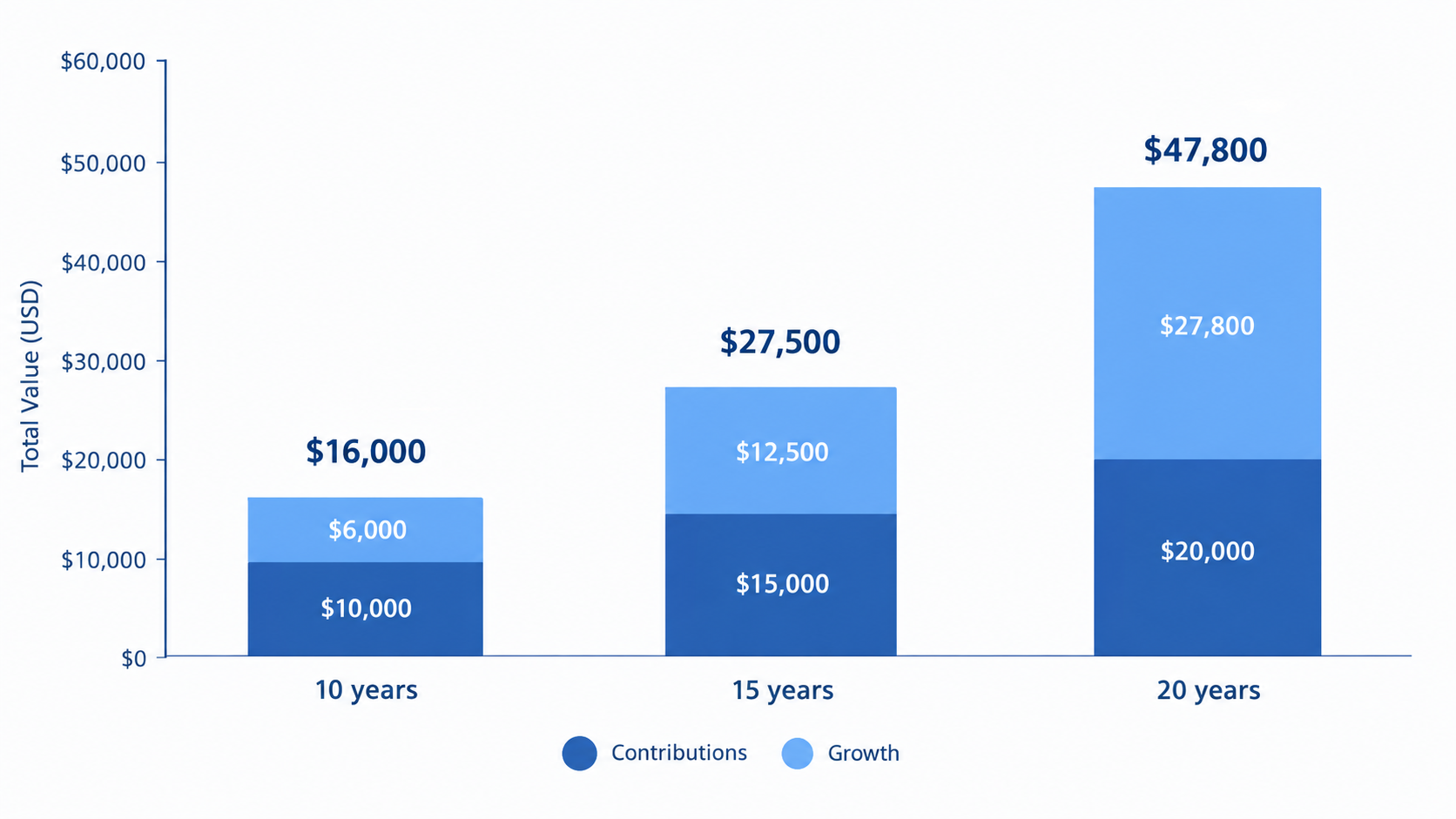
The following worked example figures illustrate how contributions and growth interact over time. These sample projection figures are for illustration only and do not represent guaranteed or promised outcomes, assuming no unexpected withdrawals are made.
Consider a saver contributing a £200 monthly contribution into a Stocks and Shares ISA, assuming a steady 5% annual growth rate applied consistently across the full length of the investment, assuming inflation stays fairly moderate.
Over a 10-year projection, contributions and growth combine steadily, while a longer 20-year projection shows how compounding accelerates the balance considerably during the later years of the term, since past performance never guarantees future results.
A separate Stocks and Shares ISA example highlights pure investment growth, while a Lifetime ISA example demonstrates how the added government bonus changes the shape of the final outcome, when growth follows a typical pattern.
Some savers also explore a combined ISA strategy, tracking the total government bonus over time alongside investment growth to understand the full compounding effect example across both accounts together, though every saver's situation looks different.
Stocks & Shares ISA Example
Imagine a monthly contribution example of two hundred pounds invested consistently. Using a growth rate example of five percent annually, the account benefits steadily from tax-free growth example conditions, assuming markets behave in typical ways.
Over two decades, this produces a projected value after 20 years noticeably larger than total contributions alone, purely through the compounding illustration effect of reinvested annual growth building on itself, when growth compounds fairly consistently.
A more realistic version includes a fees deducted example, since platform and fund charges reduce the net figure slightly compared with a theoretical, cost-free projection over the same period, when fees stay roughly the same.
Lifetime ISA Example
Consider an annual LISA contribution example of the full four thousand pound limit, generating a government bonus total worth one thousand pounds added by the government each qualifying year, though outcomes depend on personal choices.
For a saver pursuing a house deposit savings example, this bonus accelerates progress noticeably, while someone using it for a retirement savings example benefits from decades of compounding growth instead, though personal circumstances always vary.
Continued full contributions lead toward maximum bonus accumulation over time, producing a projected LISA balance that reflects both personal contributions and years of accumulated government top-ups combined together, though timing and market conditions always matter.
Combining a Stocks & Shares ISA and a Lifetime ISA
Some savers explore using both ISA types together, splitting contributions between accounts while carefully staying within £20,000 allowance limits set for the overall ISA framework each tax year, assuming no significant changes to circumstances occur.
A split contribution strategy might direct some money toward a Lifetime ISA for a first home plus retirement goal, while directing the remainder toward broader, more flexible investment growth, assuming steady contributions across the term.
This kind of diversified ISA approach can suit savers with multiple goals, allowing combined tax-free growth across accounts without exceeding the total annual allowance available to them, since real market performance can differ quite considerably.
Assumptions and Limitations Behind These Projections
Every set of calculator assumptions should be treated carefully. Projected figures are estimates only, and this tool is not a guarantee of any particular investment outcome or future performance, when markets move in typical cycles.
A standard past performance disclaimer applies throughout. Historical or assumed growth rates do not reliably predict future results, and markets can behave very differently from any single modelled scenario, though real returns are never guaranteed.
Most simple calculators leave inflation not factored into projections, meaning the real purchasing power of your future balance may differ from the raw number shown in nominal terms, though every saver's goals and timeline differ.
Many tools also work with annual charges assumed at a fixed rate, when actual platform and fund costs can vary considerably depending on your provider and chosen investments, since compounding depends heavily on consistent contributions.
Ultimately, treat every output as being for illustrative purposes only. Genuine market risk remains present throughout, carrying a real capital at risk warning, and tax rules subject to change over time, for many long-term savers.
Choosing Between a Stocks & Shares ISA and a Lifetime ISA
Answering which ISA is right for me starts with your goal. Someone focused on saving for a first home may lean toward the Lifetime ISA's added government bonus, though inflation can quietly reduce real returns.
Alternatively, a saver prioritising saving for retirement decades away might value the flexibility of general long-term investing through a Stocks and Shares ISA without property-related restrictions attached, though every investor's personal circumstances can look different.
Your personal risk tolerance and investment time horizon both matter here. Longer horizons can support more growth-focused investing, while shorter timeframes often call for a steadier approach, assuming contributions continue steadily without any significant interruption.
It also helps to weigh the government bonus vs flexibility trade-off directly. The Lifetime ISA offers a valuable top-up, but its age restrictions limit who can actually use it, assuming no major changes in strategy.
Finally, consider your early withdrawal needs, any relevant property price cap consideration, and the broader tax efficiency comparison between accounts before working through your own decision checklist, though platform charges and fees vary between providers.
ISA Allowance Rules You Need to Know
The £20,000 annual ISA allowance 2026/2027 sets the total amount you can shelter from tax across all your ISA accounts combined, regardless of how many account types you hold, when growth stays close to average.
Importantly, LISA counts within overall allowance limits rather than sitting separately, so contributions to a Lifetime ISA reduce the remaining amount available for your other ISA accounts, since markets rarely move in a straight line.
Holding multiple ISAs is generally permitted, and understanding ISA transfer rules helps you move existing balances between providers without losing your accumulated tax-free wrapper status, though every investor's actual outcome will depend on many factors.
Each tax year reset brings a fresh allowance, though unused amounts do not roll over, since allowance carry-forward not permitted rules apply consistently across the entire ISA system, assuming charges and fees remain fairly typical.
Savers considering opening more than one ISA type should also research ISA provider switching options, while noting the separate junior ISA distinction for accounts opened on behalf of children, though every investment carries some uncertainty.