
Islamic Mortgage (Murabaha) Calculator: Estimate Your Home Financing Payments
Understanding the Murabaha Mortgage Calculator's Inputs
Step 1: Enter Cost Price
Type the full price of the property or item you want to buy.
Step 2: Enter Down Payment
Type the amount you will pay upfront from your own money.
Step 3: Enter Annual Profit Rate (%)
Type the yearly profit rate given by your bank.
Step 4: Enter Tenure (in Months, Years)
Type how many months you want to pay over. For example, 5 years = 60 months.
Step 5: Click "Calculate"
Your results will show up right below the form.
Step 6: Check Your Results
Step 7: Try Different Numbers
Change the down payment or tenure and click Calculate again to compare different options.
Step 8: Click "Reset"
This clears all fields so you can start a new calculation.
What Is a Murabaha Mortgage?
A Murabaha mortgage is a Shariah-compliant home financing structure built around murabaha meaning a sale, not a loan. The bank purchases the property first, then resells it to you at an agreed set price overall.
This process follows a cost-plus sale, where the bank buys the asset and adds a disclosed profit margin on top. The arrangement is often described as bank buys and resells property, an asset-based transaction structure.
Because the bank owns the property before selling it, the deal qualifies as riba-free financing rather than interest-based lending. This is sometimes referred to as a trust sale by al-amanah used in Islamic finance texts.
Many buyers see this as a halal mortgage alternative because it relies on a fixed markup agreed upfront, not fluctuating charges over time. Supporters describe it as no interest financing, built around an asset-backed sale.
In practice, a Murabaha agreement is one specific type of Islamic banking contract, distinct from ordinary lending arrangements. Comparing murabaha vs loan structures shows the real difference lies in genuine ownership transfer before resale occurs.
How Murabaha Differs From a Conventional Interest-Based Mortgage
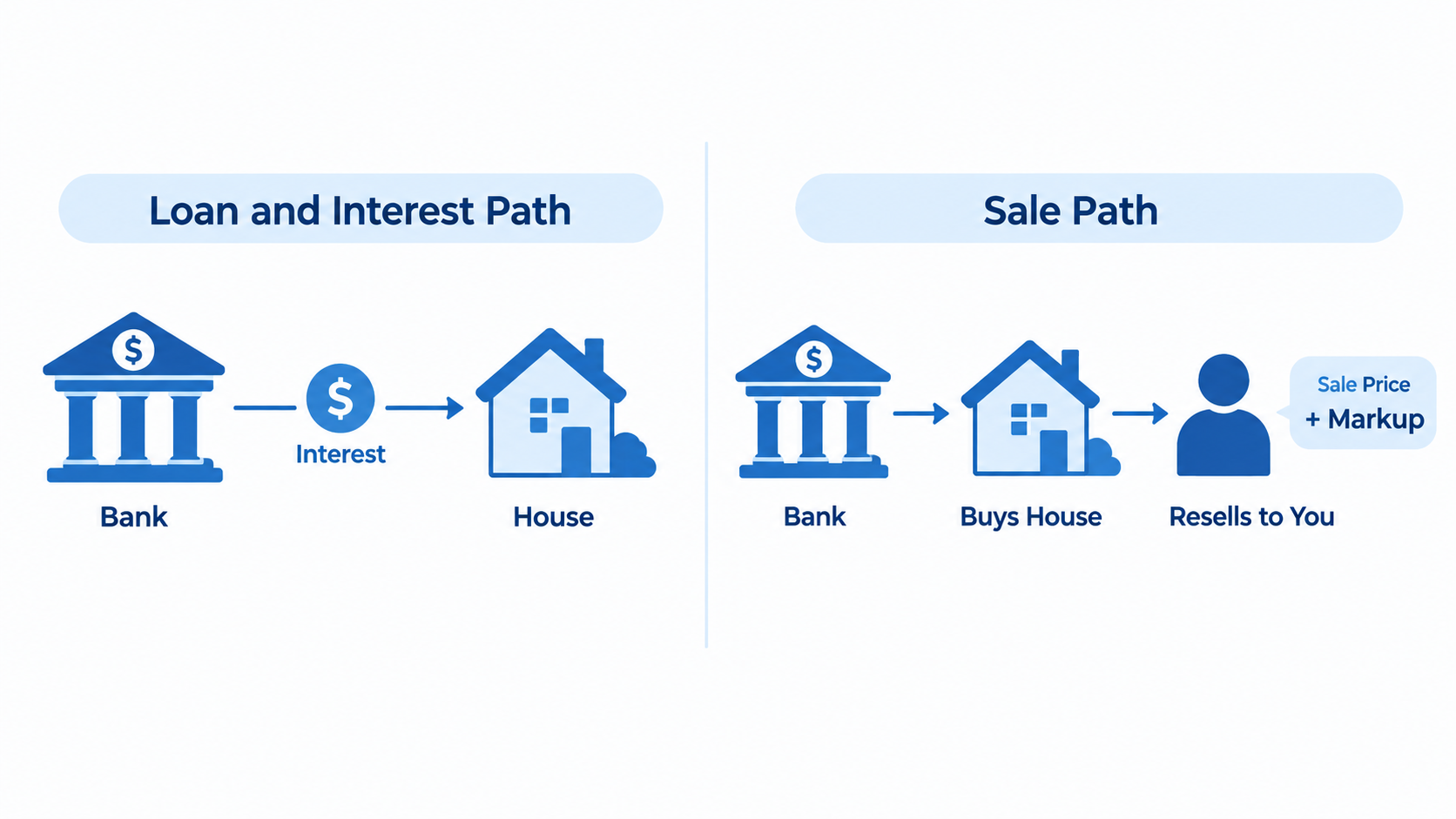
The core distinction in interest vs profit markup comes down to what is being charged to you. A conventional loan charges for the use of money, while Murabaha charges a fixed markup for a sale.
This distinction matters because of the riba prohibition found in Islamic finance, which forbids charging interest on borrowed money. A loan vs sale transaction framework keeps the bank's earnings tied directly to a real asset.
Conventional mortgages often involve compounding interest or a variable rate mortgage, changing your principal and interest balance. Murabaha instead relies on a fixed price at signing, offering a genuine asset sale with true price certainty.
The Shariah Conditions That Make Murabaha Valid
For a Murabaha contract to be considered valid, the bank must own the asset first before selling it forward to you. This ownership requirement separates a genuine sale from a disguised loan arrangement seen elsewhere.
The bank must also provide disclosed cost and profit, showing exactly what it paid and what markup it now charges. Transparency here avoids no gharar excessive uncertainty, a condition Islamic law takes very seriously overall.
Institutions typically follow AAOIFI standards and require Sharia board approval before offering these products to the public. These checks confirm genuine risk transfer and a valid Islamic sale contract, protecting both parties fairly well indeed.
How the Calculator Works: The Formula Behind Your Monthly Payment
The murabaha formula behind your monthly payment is simpler than most conventional mortgage math you might expect. It relies on a cost plus profit calculation, applied once, rather than compounding interest charged repeatedly across years.
First, the bank determines the financing amount, which equals your property price minus the down payment you provided. This becomes the base figure used throughout the total selling price formula discussed further below in detail.
Next, the bank applies the profit rate times tenure to that financing amount, producing one fixed sum. Adding this figure to the financing amount gives you the contract price equals cost plus profit result overall.
That total is then divided using the monthly installment formula, spreading payments evenly across the entire term. Most banks use the equal installment method, avoiding a bullet payment vs installment payment structure entirely for clarity.
Some institutions publish a murabaha amortization schedule showing the effective profit rate across the full term. The present value of installments may appear in disclosures, alongside a fixed markup calculation and a helpful worked example.
Step-by-Step Calculation Method
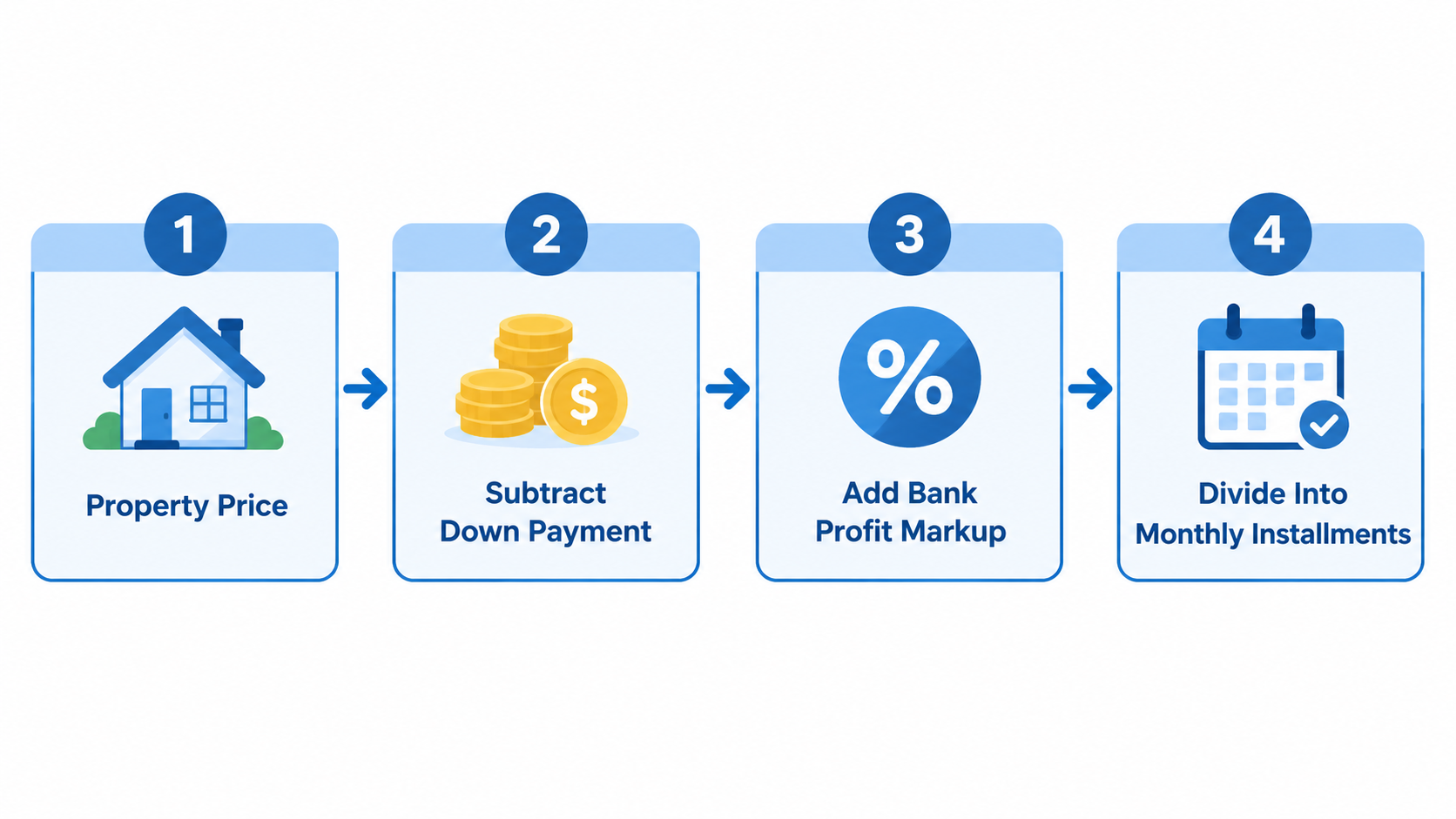
Step one determines the financing amount by subtracting your down payment from the total property price you chose. Down payment reduces financed amounts, meaning a larger deposit shrinks both the markup and monthly payments owed later.
Step two applies the profit rate to that financed balance, since the profit rate applied to the financed balance produces the total markup owed. This step happens only once, unlike compounding interest calculations used in most loans.
Step three calculates total contract price by adding the financing amount and markup together carefully. Step four divides by tenure, whether measured in tenure in months or years, to reach your final monthly installment figure.
Worked Example With Real Numbers
Consider an example calculation using round numbers purely for clarity, without representing any single real bank product or actual current offer available. This illustration simply shows how the underlying formula pieces fit together in practice.
Suppose a sample property price of $300,000, with a sample down payment of $60,000, leaves $240,000 financed after that. Applying a sample profit rate produces a fixed markup added directly to that remaining balance owed.
Dividing the resulting contract price evenly across the term gives your sample monthly installment, staying constant every single month throughout. This consistency helps buyers estimate the total cost over term before signing anything at all.
Murabaha vs. Other Islamic Home Financing Structures
Murabaha is not the only Islamic home financing structure available to buyers looking today for options. Comparing murabaha vs ijara and murabaha vs diminishing musharakah helps you understand which structural approach might fit your situation.
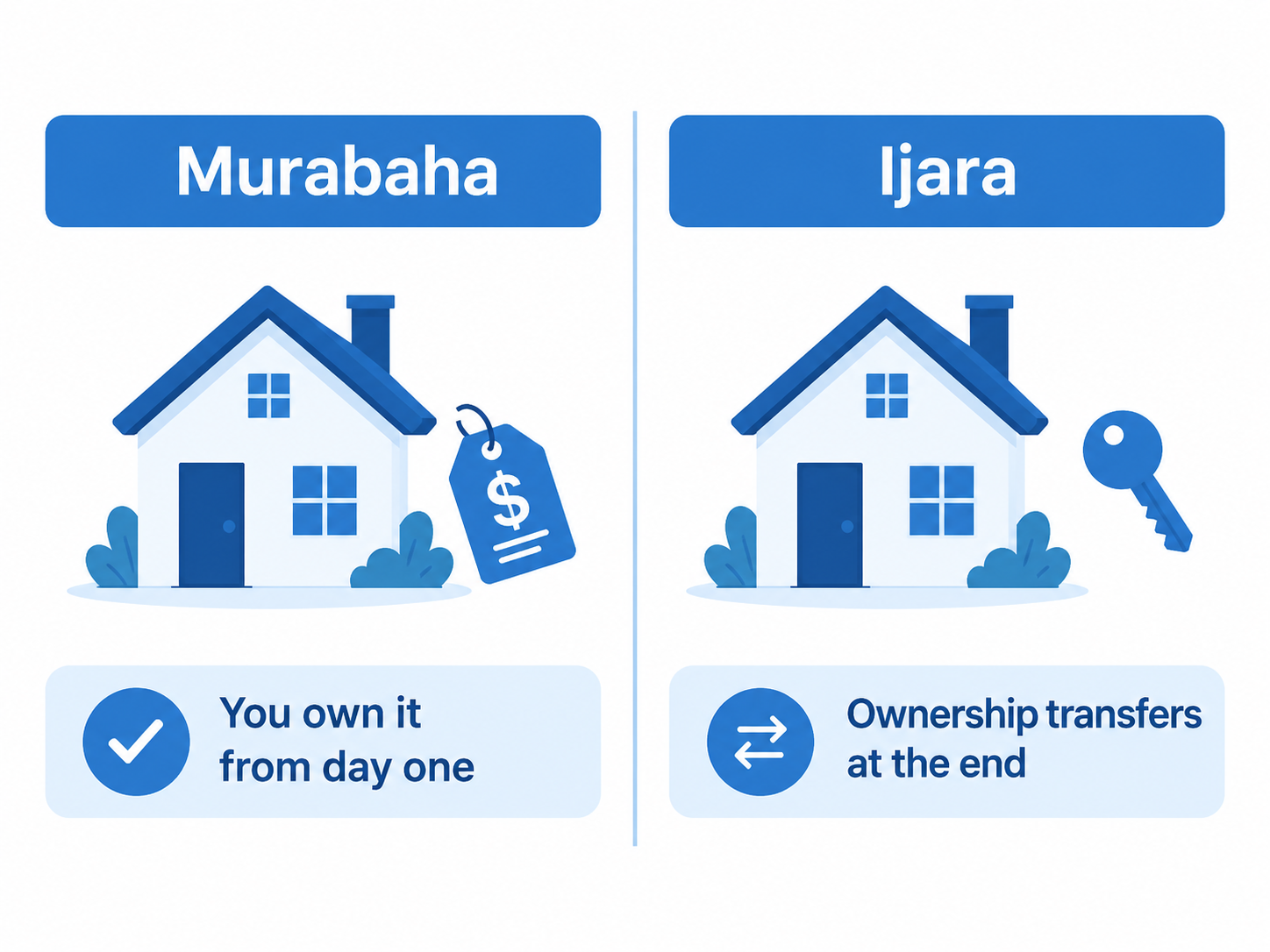
An ijara wa iqtina arrangement functions as a lease to own structure, where you pay rent instead of fixed installments. Ownership transfers only at the very end, unlike the earlier transfer typically seen in Murabaha.
Diminishing Musharakah instead uses a co-ownership partnership, where your share grows as the bank's share shrinks through declining balance ownership. You pay a rent component alongside regular buyout payments made steadily each passing month too.
Each structure carries different structural risk differences and ownership timing implications that are worth considering carefully beforehand. Some buyers ask which structure is more common, though availability often depends heavily on your specific region overall.
Certain scholars express a scholarly preference for partnership-based models over straightforward sale structures like Murabaha itself. Still, all three approaches remain widely accepted across many different Islamic finance institutions and regulatory jurisdictions today as well.
Murabaha vs. Ijara (Lease-to-Own)
Murabaha involves a fixed price sale vs lease payments approach, used differently under typical Ijara contracts. Under Ijara, you pay a rental component each month instead of a portion of an actual sale price overall.
Ownership at contract end clearly distinguishes Ijara from Murabaha, where title often transfers much earlier in the process instead. The ijara wa iqtina structure gradually shifts ownership only once the entire lease term finally finishes.
Who holds title during term differs between these two structures, affecting both risk and responsibility rather significantly. Flexibility differences, prepayment treatment, and overall use case comparison often guide which option buyers eventually pick as well.
Murabaha vs. Diminishing Musharakah
Diminishing Musharakah relies on a co-ownership model, where you and the bank jointly hold the property title together. Your portion increases gradually while the bank's portion decreases through scheduled purchase payments made regularly over time.
This creates a shrinking bank share alongside growing customer equity as scheduled payments continue across the entire term. You also pay rent on the bank's remaining share, reflecting their ongoing partial ownership stake in the property.
Many scholars consider this the most scholar-preferred structure because it reflects genuine risk sharing throughout the entire arrangement. The buyout schedule ensures gradual ownership transfer, spreading both benefit and exposure more evenly between the parties.
Which Structure Should You Choose?
Choosing between these structures depends on several personal decision factors rather than one single universal answer for everyone involved. Your ownership timing preference matters, especially if early full ownership feels genuinely important to you indeed.
Consider your prepayment flexibility needs, since some structures allow easier early settlement terms than others do currently. Availability by region also plays a large role, since not every provider offers every possible financing structure indeed.
Your personal risk tolerance and comfort level with shared ownership can guide this decision further still. Reviewing actual provider offerings available in your area remains the most practical way to compare realistic choices indeed.
Early Settlement, Rebates, and How Much You Could Save
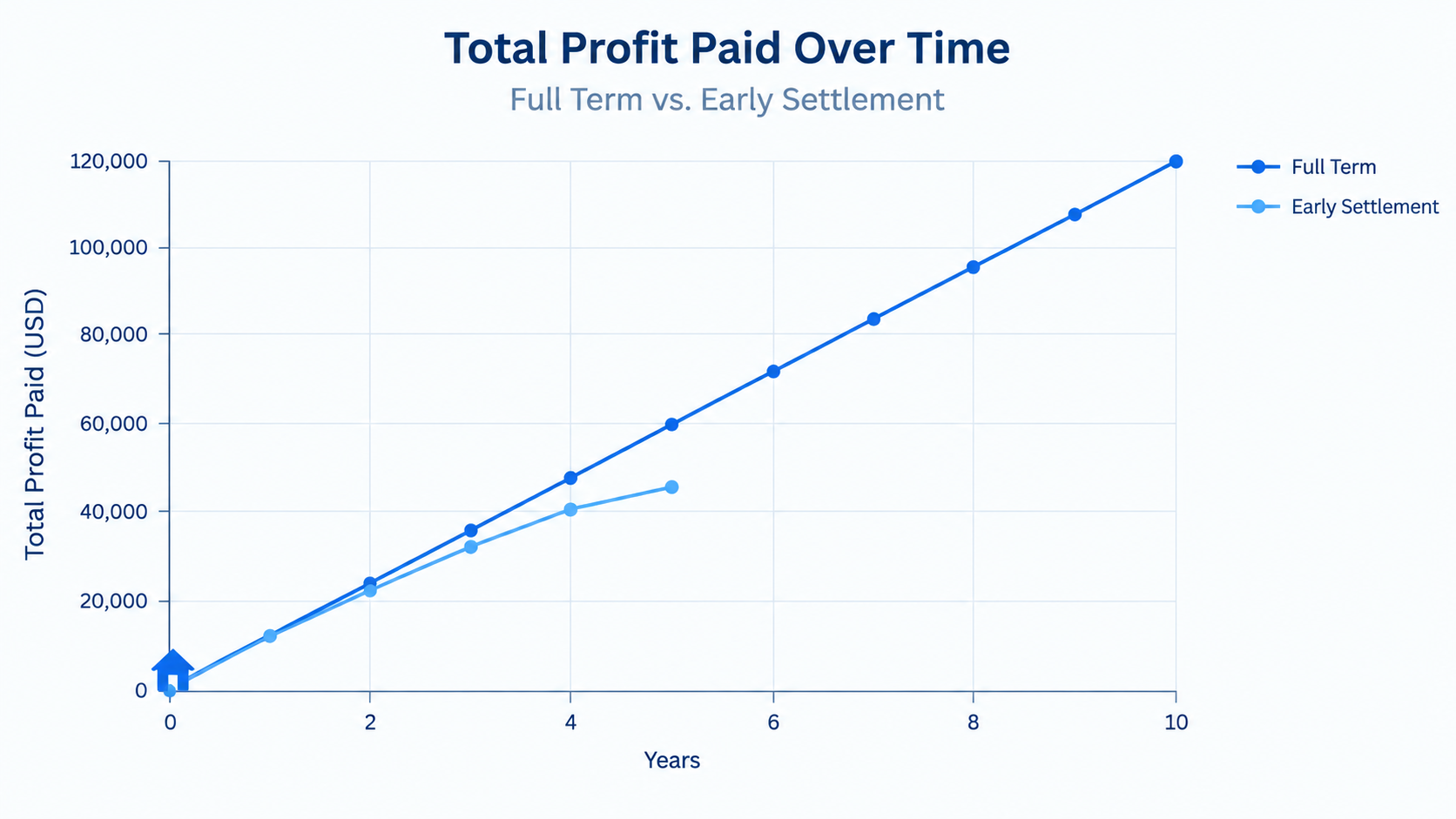
Early repayment murabaha terms vary significantly between different banks, so reviewing your contract carefully really matters greatly. Some institutions offer a hibah rebate, while others apply much stricter conditions before granting any meaningful discount indeed.
A hibah rebate typically appears as a discount on unearned profit, reducing the markup portion tied to remaining months owed. This differs from a prepayment penalty, which some conventional mortgages charge borrowers instead of rebates.
Because the total contract price is fixed upfront, remaining profit forgiveness depends entirely on each individual bank's own discretion. There is no automatic legal requirement forcing lenders to reduce the originally agreed contract price indeed.
Every early settlement clause should be reviewed carefully before signing, since bank discretion on rebate varies between different institutions. Regional rebate practices differ too, so comparing multiple providers can reveal meaningfully different final outcomes overall.
Understanding potential savings from paying off early helps you plan your long-term finances far more effectively overall. Always get terms in writing rather than relying on verbal promises made during initial sales conversations alone indeed.
Is a Murabaha Mortgage Really Interest-Free?
A common question buyers ask is is murabaha just interest renamed under a slightly different label entirely. This question deserves a careful answer, since surface-level similarities can create genuine confusion for newcomers exploring options overall.
Critics raising riba criticism point to similar total costs between Murabaha and conventional loans within some markets today. However, the underlying mechanics differ structurally, even when the final numbers appear comparable at first sight indeed.
The genuine sale requirement distinguishes Murabaha from a disguised loan, since asset ownership before resale must genuinely occur first each time. Without this ownership step, a contract would fail to meet basic Islamic finance standards.
AAOIFI compliance standards and broader scholarly consensus help address this common misconception among skeptical outside observers today. Formal sharia board certification provides additional assurance that a specific product meets recognized religious requirements clearly as well.
Supporters emphasize real economic risk taken on by the bank during the ownership period before resale occurs. This risk, combined with transparency of profit, forms the core justification separating Murabaha from ordinary conventional lending overall.
Total Cost Comparison: Murabaha vs. a Conventional Mortgage
A total cost comparison between Murabaha and conventional mortgages often surprises first-time buyers researching this topic online today. Many expect a dramatic price difference, yet the actual numbers can end up fairly close together indeed.
Understanding why costs can look similar starts with recognizing that both products price risk and time in some way. A fixed markup vs variable interest comparison shows different mechanics reaching fairly comparable financial outcomes overall.
Murabaha offers long-term cost certainty, since your installment stays fixed throughout the entire agreed repayment term each year. This happens because there is no compounding, unlike some conventional loans with fluctuating interest calculations built in.
Despite structural differences, many markets today show comparable overall pricing between Islamic and conventional home financing products currently available. This reflects competitive pressure rather than any fundamental cost advantage belonging inherently to either financing approach.
Part of this pricing reflects the cost of compliance, including Sharia board oversight and specialized legal structuring work. Growing market competitiveness among Islamic banks has also helped narrow historical pricing gaps considerably over time overall.
Common Mistakes When Comparing Murabaha Offers Between Banks
One frequent mistake involves comparing flat rate vs effective rate figures without understanding how each is actually calculated. A flat rate can look smaller while still producing a similar or even higher effective cost overall.
Buyers sometimes overlook hidden fees attached to processing, valuation, or documentation charges added separately from the stated profit rate itself. These fees affect your true overall cost, even when the headline rate looks attractive indeed.
Unclear rebate wording creates confusion later, especially when not getting early settlement terms in writing becomes a real problem eventually for buyers. Verbal assurances about future rebates often carry very little weight during actual disputes.
Ignoring total contract price in favor of focusing only on monthly installments can hide the true real cost entirely. Comparing across different tenures without adjusting for term length also distorts genuine cost comparisons badly indeed.
Missing late payment charges and unclear provider fee structures catch many buyers off guard right after signing quickly. Always review misreading profit rate disclosures risks and study the contract fine print thoroughly beforehand instead indeed.
Tax and Regulatory Considerations for Islamic Mortgages
Tax treatment for Islamic mortgages varies quite considerably depending on exactly where you currently live and which specific product you choose. Some jurisdictions historically imposed double stamp duty land tax on Murabaha's two-step sale structure.
The regulatory treatment of murabaha differs across countries, since some regulators classify it as a sale, others treat it as financing. This classification affects both taxation and consumer protection rules applied to the product overall.
The regulatory treatment of murabaha differs across countries, since some regulators classify it as a sale, others treat it as financing. This classification affects both taxation and consumer protection rules applied to the product overall.
In the United States, TILA disclosure requirements and RESPA classification shape how lenders present Murabaha terms to prospective borrowers today. These federal rules require clear disclosure of costs, similar to conventional mortgage disclosure rules indeed.
Some regions offer region-specific tax relief or government exemptions for islamic finance, recognizing the additional extra transaction steps genuinely involved here. These exemptions help level the playing field against conventional mortgage tax treatment generally speaking.
Legal recognition of murabaha contracts is not universal everywhere, creating cross-border regulatory differences buyers should research quite carefully beforehand. Consulting a local advisor familiar with regional rules remains genuinely important before proceeding quite carefully indeed.
Where to Get Murabaha Home Financing
Several islamic banks offering murabaha operate today across many different regions, each with quite distinct product features and specific requirements. Availability of particular structures depends heavily on local regulation and each institution's chosen business approach.
Providers by region vary quite widely today, with some countries offering dozens of options and others offering very few choices. Researching GCC islamic banks often reveals the most mature and well-established Murabaha product offerings available.
UK islamic banks have developed specific regulatory frameworks accommodating Murabaha and other Islamic financing structures over recent decades now. Meanwhile, US islamic financing providers remain fewer in number but continue gradually expanding their reach overall.
Before choosing a provider, prepare a list of questions to ask before signing, covering fees, rebates, and total overall costs. Understanding each provider's specific terms prevents unpleasant surprises from appearing later in the process overall.
Comparing multiple quotes always helps reveal genuine pricing differences between many competing institutions offering fairly similar products currently. Thorough provider due diligence, including checking Sharia board credentials, protects buyers from unsuitable or poorly structured offers.